A micro realism animal tattoo is a small, highly detailed portrait of an animal, built from soft shading and texture instead of bold outlines. It works best when the animal has a strong, recognizable shape, the design has enough size for fur and eyes to read, and the artist knows when to simplify. Elephants and big cats are great candidates, and so are small creatures like spiders.
Animals are some of my favorite subjects. Some I tattoo as micro realism portraits, others in fine line or dotwork, depending on what the design and the placement can hold. Here is how I think about them.
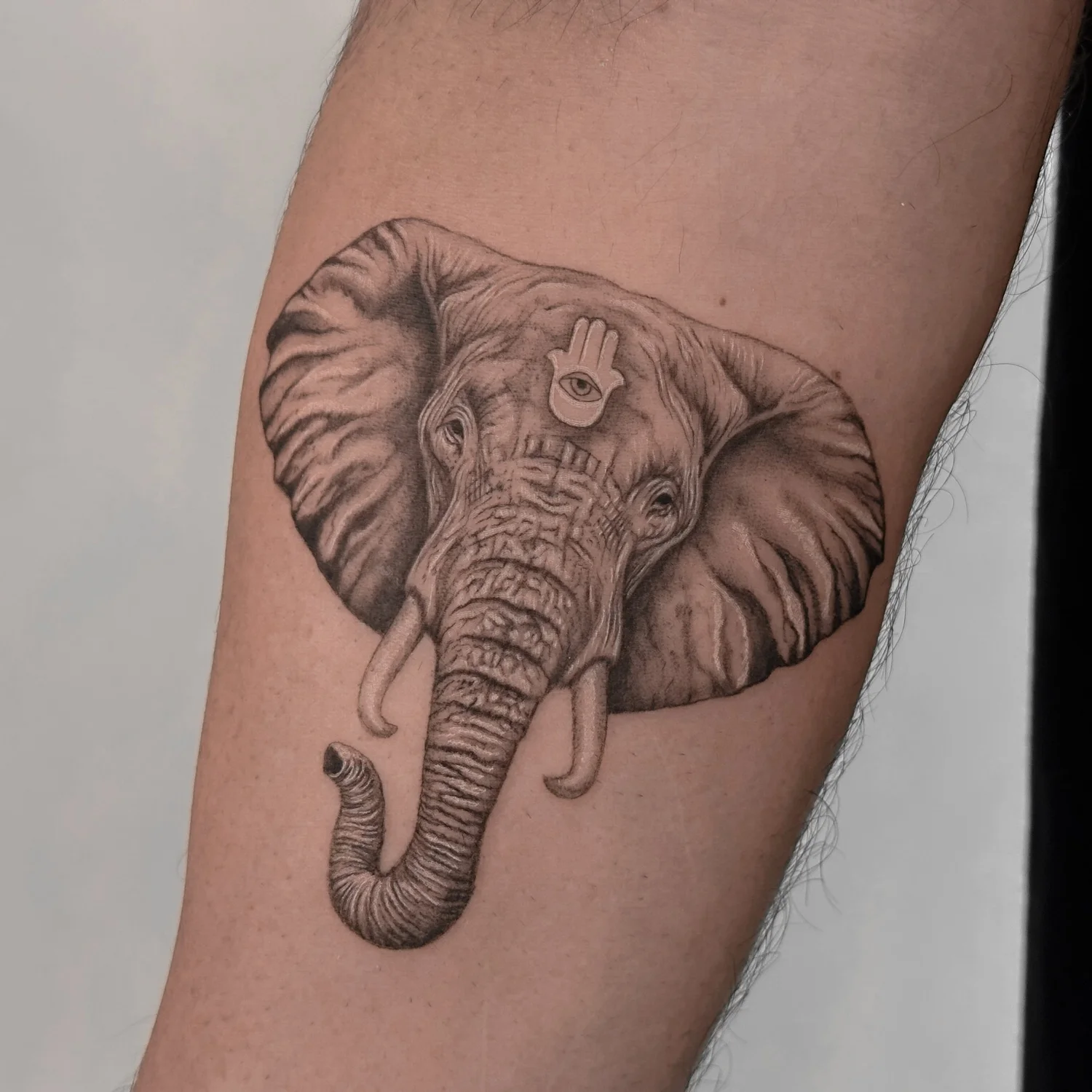
What makes a micro realism animal tattoo different from a regular animal tattoo?
A traditional animal tattoo uses outlines and solid shading to describe the animal. Micro realism tries to make it look real at a tiny scale. There are no heavy outlines. Shape comes from light and shadow, and texture comes from many small marks: the wrinkles of elephant skin, the spots on a cheetah, the short fur around an eye.
That level of detail is why I often use a single needle for this work. One needle builds soft gradients slowly, which is what realistic fur and skin need.
Which animals work best as micro realism tattoos?
The best animals for small, detailed tattoos share a few things:
- A recognizable silhouette. An elephant's ears and trunk, a giraffe's neck, a big cat's posture. If the outline alone tells you what it is, the tattoo will read from a distance.
- Strong texture. Wrinkled skin, spots and patterned fur give shading something to describe.
- Clear eyes. In a portrait, the eyes carry the expression. They need enough room to hold a highlight.
Pets work beautifully too, especially as a portrait from a good photo. Very fluffy, low-contrast animals can be harder, because soft fur at a tiny size can blur into a grey shape.
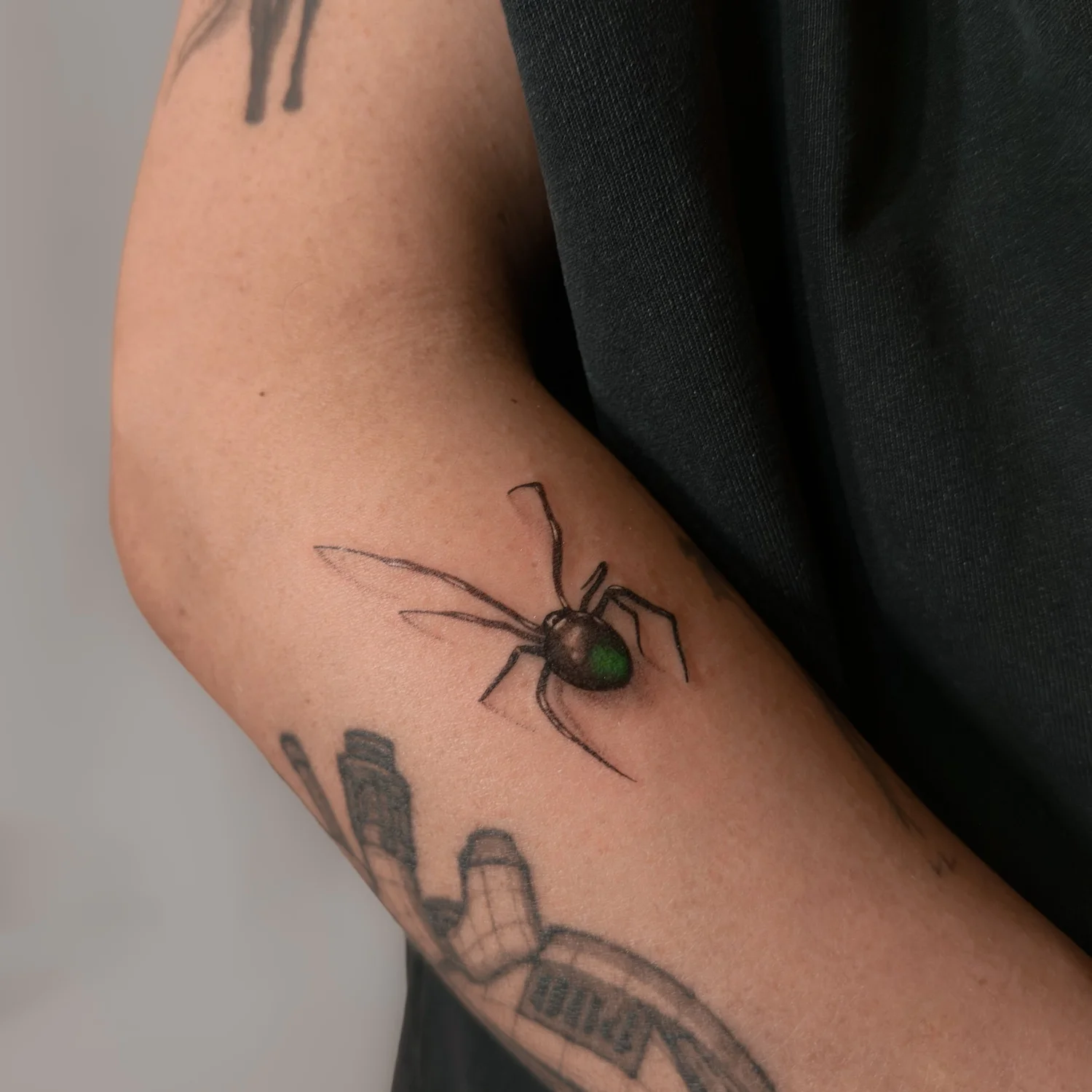
Small creatures can be the easiest animals of all to do in micro realism, because they already look right at a small size. The black widow above is a micro realism piece on the upper arm.
How small can a micro realism animal tattoo be?
Smaller than most styles, but not as small as people sometimes hope. Every tattoo softens as skin ages, and very fine detail packed into a tiny space is the first thing to blur. If a portrait has eyes, whiskers and fur texture, I will usually suggest sizing it up a little so those details still read in a few years.
A good rule I follow: the more realistic the detail, the more room it needs. A simple line drawing of an animal can be small. A realistic portrait needs space to breathe.
When is fine line or dotwork a better choice than micro realism?
Not every animal tattoo should be realistic. Sometimes a lighter approach suits the idea and the skin better.
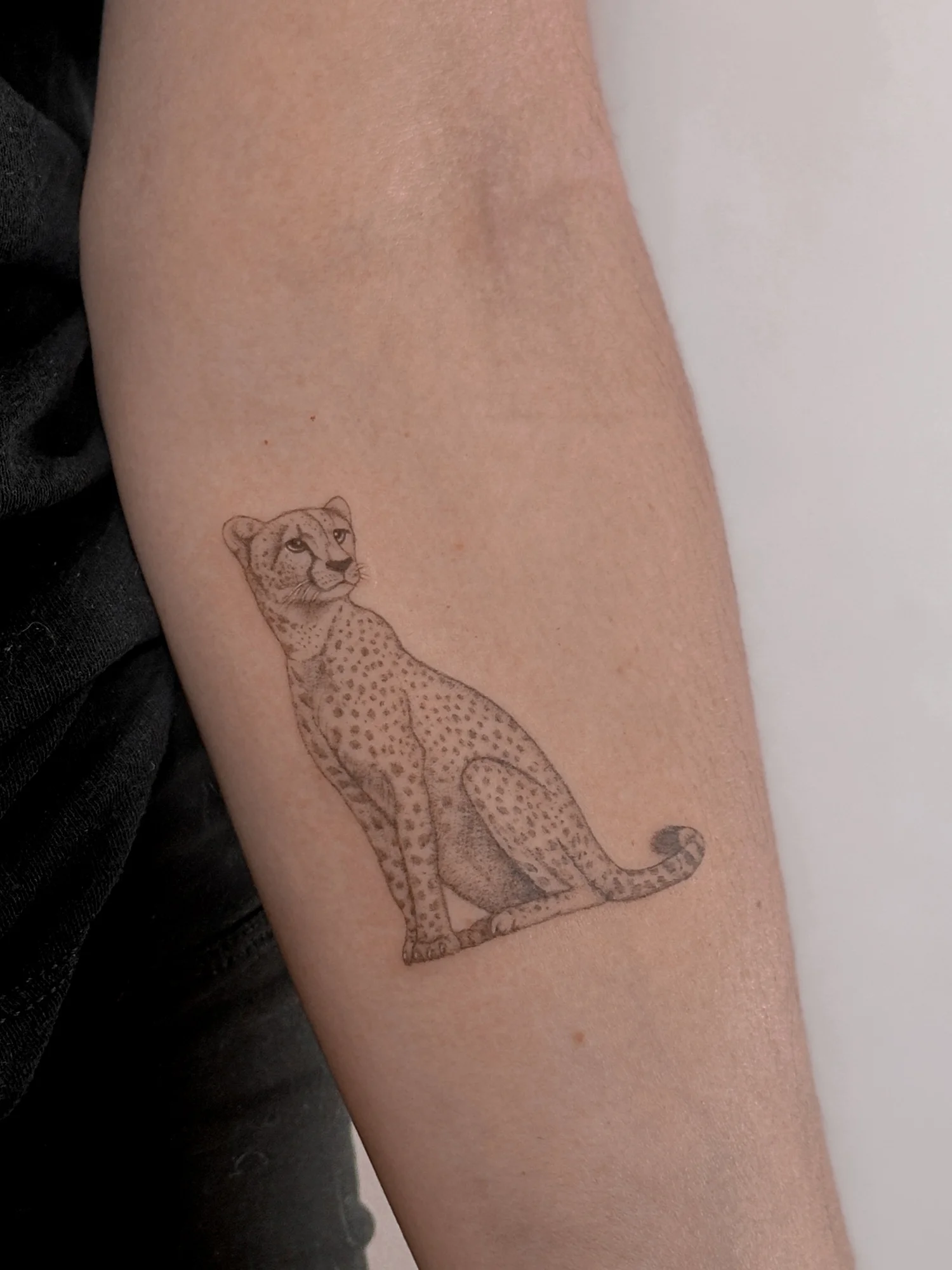
The cheetah below is done in fine line dotwork. Dots build the spots and the shading, which keeps it airy and graphic rather than photographic.
The giraffe below sits inside a constellation, drawn in fine line, which turns the animal into something more symbolic.
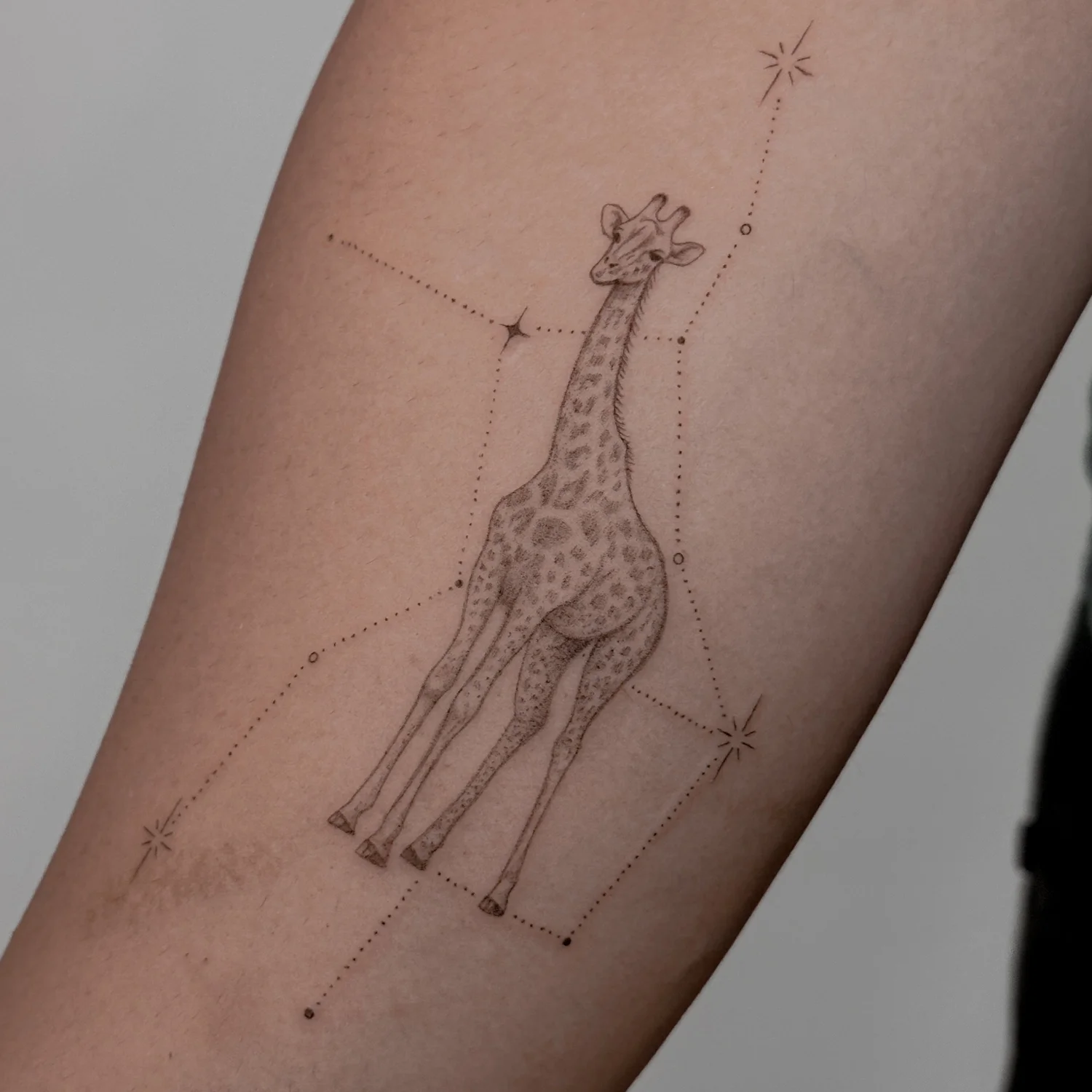
Fine line or dotwork can be a better fit when you want the tattoo small, when the placement moves a lot, or when the animal stands for an idea more than a specific face. Micro realism is the choice when you want that particular animal, with its expression and texture, to feel alive.
Where should an animal portrait tattoo go?
Realistic detail likes flat, stable skin. The forearm is the classic choice, and the upper arm and the back of the arm work well too. These areas give enough space, move less than hands or wrists, and are easy to care for while healing.
Hands, fingers and feet are tough for micro realism. Friction and constant washing soften fine detail quickly there, so I keep designs on those areas much simpler.
How do you care for a detailed animal tattoo so it lasts?
Healing is where detail is kept or lost, so follow the studio's fine line tattoo aftercare guide closely, especially the rule about letting flakes come off on their own.
Long term, sun is the biggest enemy of fine shading, and Los Angeles has plenty of it. Keeping a healed portrait out of strong sun is the easiest way to protect its texture.
You can see more of my animal work at whoisagne.com.
FAQ
What is micro realism in tattooing?
Micro realism is realistic tattooing at a very small scale. It uses soft shading and fine texture instead of bold outlines to make a tiny image look lifelike.
Can you tattoo my pet as a micro realism portrait?
Yes. A clear, well-lit photo where you can see the eyes makes the biggest difference. I draw every design custom from your references.
Do micro realism tattoos age well?
Every tattoo softens over time, and fine detail shows it first. Enough size, a stable placement, careful aftercare and sun protection after healing help a micro realism tattoo hold its detail for longer.
How much does a micro realism animal tattoo cost?
My minimum is $300. Detailed portraits are quoted individually after you send me your idea and references.
If you have an animal in mind, book with me at Kastana.