Single needle shading builds black and grey tones one tiny point at a time instead of laying them down with a wide grouping of needles. The result is smoother gradients, softer transitions and finer texture, which suits portraits, animals and delicate details. The trade-off is time, and the design needs enough size and contrast for that softness to last.
I work mostly in fine line and single needle, and black and grey shading is where a single needle shows its character most. Here is how single needle shading works, what it suits and how I think about designing it so it still reads years from now.
What is single needle shading?
Single needle shading is black and grey shading made with one needle point, a setup called a single round liner or 1RL. Most shading in tattooing is done with magnums, wide rows of needles that cover more skin with each pass. A single needle covers a tiny area, so tone is built up gradually, pass by pass, until the shadows have the depth they need.
How is single needle shading different from shading with a magnum?
A magnum lays down a wide, even band of tone quickly. That is ideal for large areas, solid backgrounds and bold black and grey pieces that cover a lot of skin.
A single needle makes much smaller marks. Transitions from dark to light can be very gradual, and texture like fur, feathers, stone or skin can be suggested with small strokes rather than flat fill. At a small scale, that precision matters. A wide grouping can be too broad to place tone exactly where a tiny face or a paw needs it.
The limits are worth knowing too. Large solid black areas and big fills are slow with one needle and are usually better suited to larger groupings. When an idea leans that way, I will tell you.
What does single needle shading look best on?
Single needle shading shines when softness and detail matter more than boldness:
- Animal portraits, where fur and eyes need fine texture.
- Figures and faces, like cherubs, statues and classical references.
- Botanicals with soft petals and gentle shadow.
- Small objects with light and shadow, like shells, pearls or skulls.
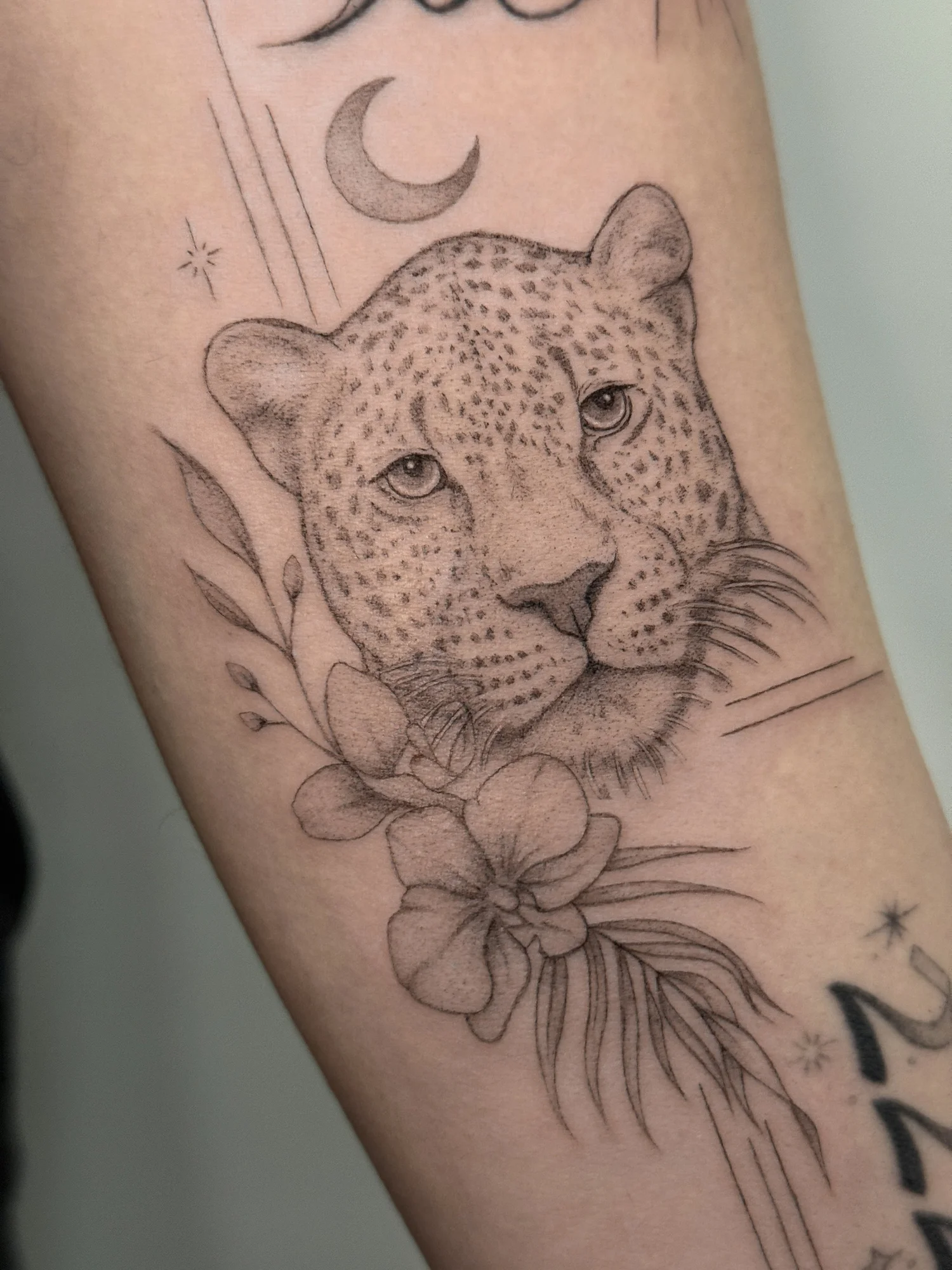
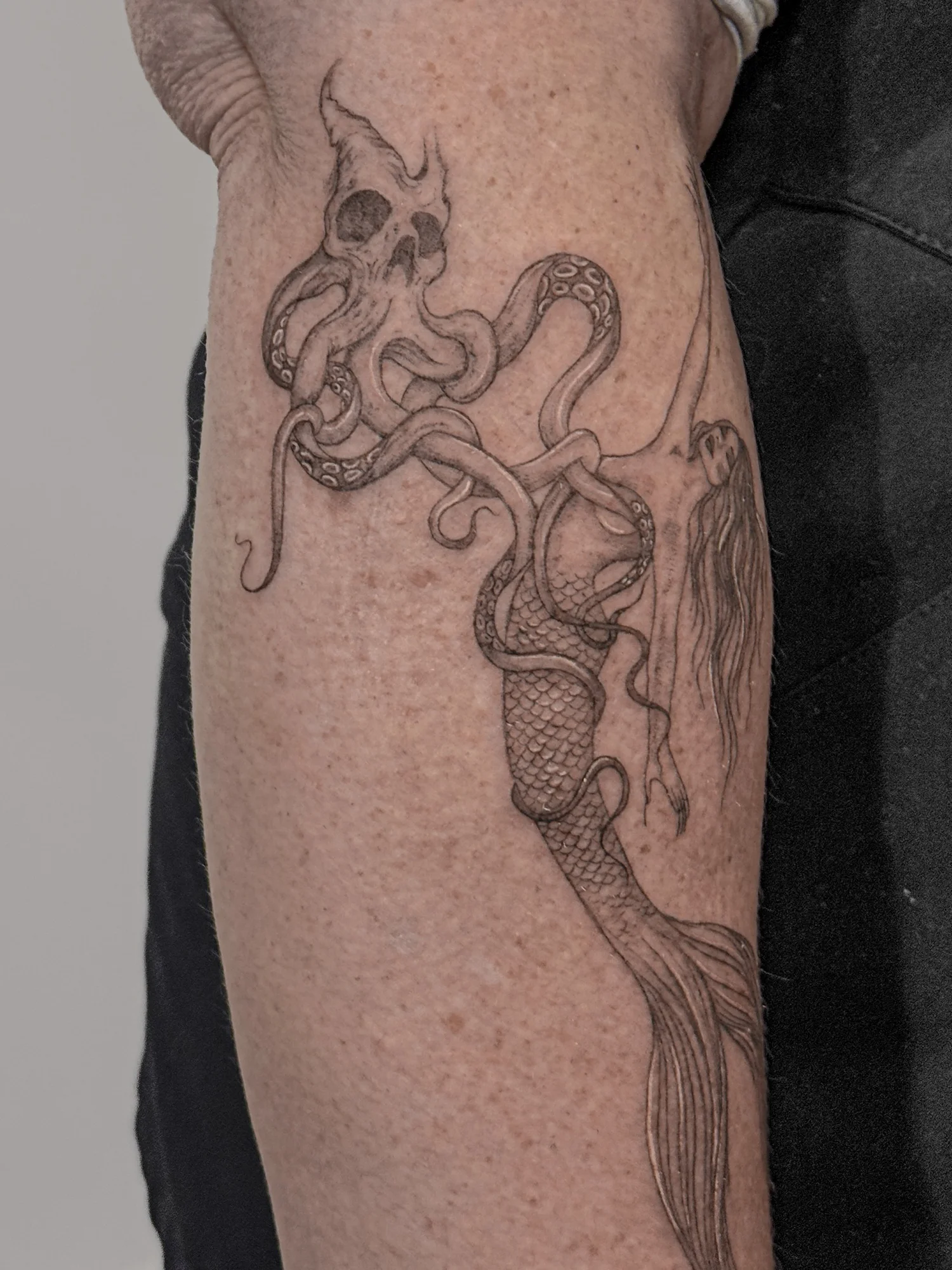
The leopard portrait above shows the kind of soft fur texture and gentle gradient that black and grey shading can carry at forearm size. Below, the octopus and skull show how soft shading and plenty of open skin keep a more detailed design readable.
Why does black and grey shading heal lighter than it looks on day one?
Every tattoo loses a little ink while it heals, and the lightest tones show it most. Ink maker Starbrite notes that light, diluted grey tones look lighter after healing and fade more noticeably over time than solid black (Starbrite's grey wash guide).
With single needle shading, where the tones are already soft, that matters. A gradient that looks perfect on the day can lose its palest steps once the skin settles. That is why I think about contrast from the very start. The darkest shadows anchor the design, and the softest greys should never be the only thing holding the image together.
Fresh shading can also look slightly cloudy or uneven for the first weeks. That is the skin healing, not the final result.
How do you keep single needle shading soft but readable?
Most of it comes down to design decisions made before the needle touches skin:
- Size. The more detail and shading you want, the more room the design needs. I would rather make a piece a little bigger than watch tiny shadows merge together.
- Contrast. Keep some true darks. A design shaded entirely in light grey can fade into a blur.
- Open skin. Untouched skin works as the brightest highlight. Leaving it open gives shading something to push against.
- Placement. Forearms and upper arms hold soft shading well. Hands and fingers soften fastest because of friction and washing.
- Sun. Living in Los Angeles, everyday sun is one of the biggest things you control. Once your tattoo has healed, keep it out of strong sun when you can.
How do you care for single needle shading while it heals?
The first two weeks protect all of that careful tone. The full routine is in the Kastana aftercare guide.
How do you know if single needle shading is right for your idea?
Single needle shading suits you if you want something soft, detailed and delicate rather than bold and graphic. A pet portrait, a classical figure or a shaded flower are all good starting points.
If you are not sure, send me your idea with a few references and your placement. I will tell you honestly whether single needle shading fits, or whether a bolder approach would hold up better. You can see more of my black and grey work at whoisagne.com.
FAQ
Does single needle shading take longer?
Usually, yes. Tone builds up gradually with one needle, so the same design takes longer than it would with a larger grouping. How long depends on size and detail.
Will single needle shading fade?
Every tattoo softens over time, and light greys soften first. Enough size, strong contrast, a stable placement and sun protection after healing all help shading last.
Can single needle shading be touched up?
Yes. I include one free touch-up within six months, which is the right time to refresh any light areas that healed softer than planned.
How much does a single needle shaded tattoo cost?
My minimum is $300. Shaded pieces are quoted individually once I see your idea and references.
If you want soft black and grey shading, book with me at Kastana.