A small insect tattoo works best when the insect is drawn close to life size, simplified to its clearest shape and given enough contrast to stay readable as it heals. Bees, spiders, dragonflies, moths and beetles all translate beautifully to fine line and micro realism, as long as legs, wings and antennae have room to breathe.
Insects are some of my favorite things to tattoo. They are already small, they are full of structure, and they reward the kind of precision I care about most. Here is how I approach small insect tattoos, which insects work best and how to keep tiny details clear for years.
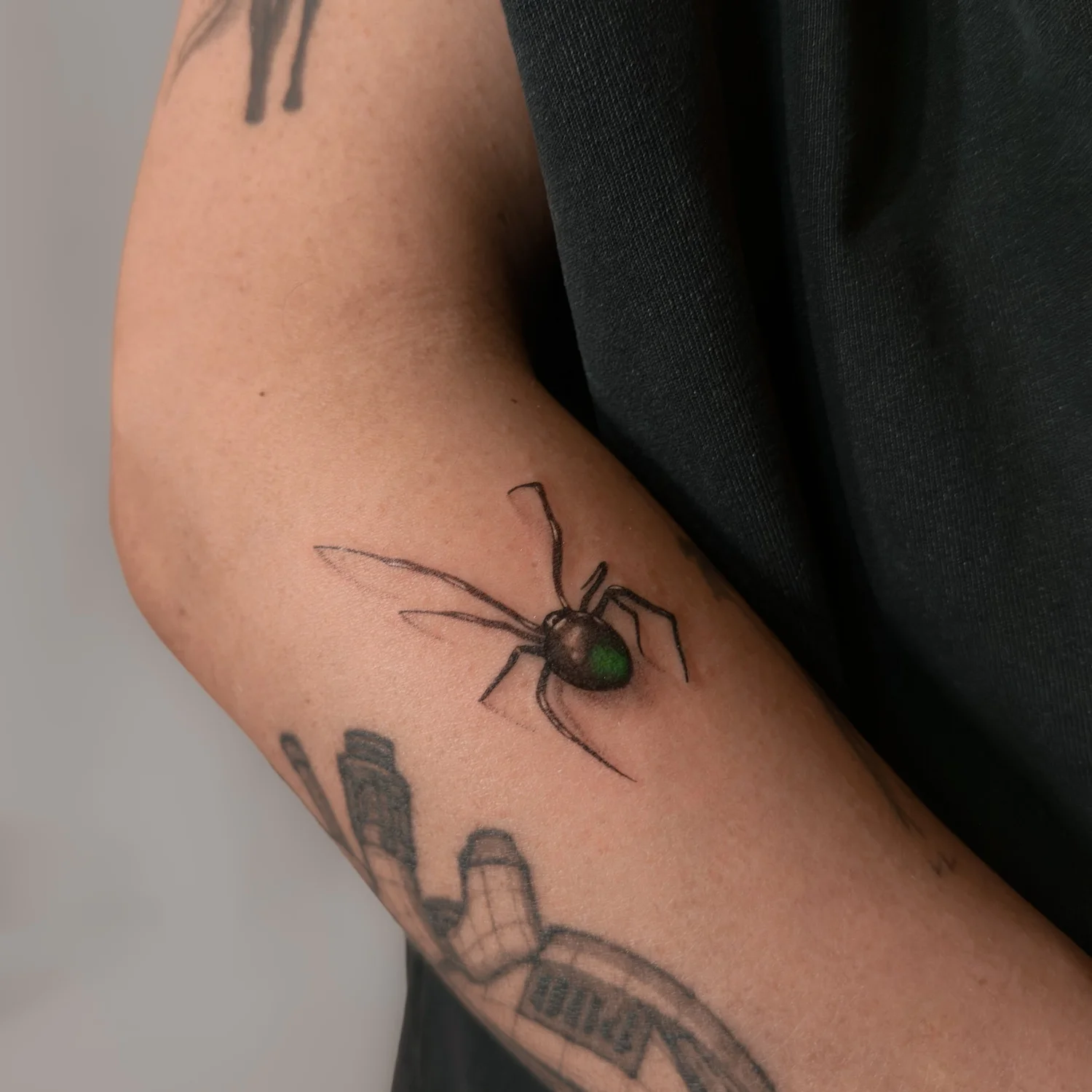
Why do insects suit small fine line tattoos?
Insects suit small fine line tattoos because they are naturally small. A bee or a spider drawn at real size looks right on skin in a way a tiny elephant or a tiny portrait never quite can. Your eye accepts the scale immediately.
Insects are also built from clear parts: a head, a body, legs and wings. That structure gives me strong shapes to work with, and strong shapes are what keep a small tattoo readable. Everything is symmetrical, tiny and exact, and small errors show.
Which insects make the best small tattoos?
- Bees. A rounded body, clear stripes and two pairs of wings. Bees work in black and grey or with a touch of color, and pair well with honeycomb, flowers or geometric elements.
- Spiders. Strong silhouettes and long legs. A spider can be very graphic or very realistic, and micro realism shading gives the body real depth.
- Dragonflies. Long, straight bodies and four wings that suit the ribs or the inner forearm.
- Moths and butterflies. Wide wings with patterns that can be simplified or detailed, depending on size.
- Beetles and ladybugs. Compact, rounded shapes that hold up well even when small.
People choose insects for all kinds of reasons, often personal ones: a garden, a childhood memory or simply loving how the creature looks. You can see more of my insect and micro realism work at whoisagne.com.
How small can a small insect tattoo be?
Size is the most important decision in a small insect tattoo, more than style or placement. The real question is not how small the whole insect can be, but how small its thinnest part can be.
Legs and antennae are single lines. If two legs sit too close together, they merge into one shape as the tattoo settles. If the spaces between wing veins are too tight, the wing turns grey instead of reading as a pattern.
So I size an insect by its details. A simple silhouette, like a spider with a solid body and clean legs, can stay quite small. A bee with stripes, wing texture and fuzz needs more room. A moth with patterned wings needs the most. If you want a lot of detail at a very small size, I will usually suggest simplifying: fewer wing veins, cleaner legs and a stronger outline. I would rather make a piece a little bigger than watch tiny details blur together in a few years.
Should a small insect tattoo be black and grey or color?
Both can work. Black and grey shading with a single needle gives soft, realistic texture on bodies and wings, and black holds up best over time. Color can bring an insect to life, like a ladybug's red or a bee's warm yellow, but lighter colors like yellow soften first, which matters for golden bees and beetles.
My approach to small color is the same as with my tiny fruit tattoos: a solid structure underneath, with color used where it counts. I explain that in my post on tiny color fruit tattoos.
Where should you place a small insect tattoo?
An insect can look like it has just landed on you, which makes placement part of the design. A bee on the forearm, a spider on the upper arm or a dragonfly along the ribs all feel natural.
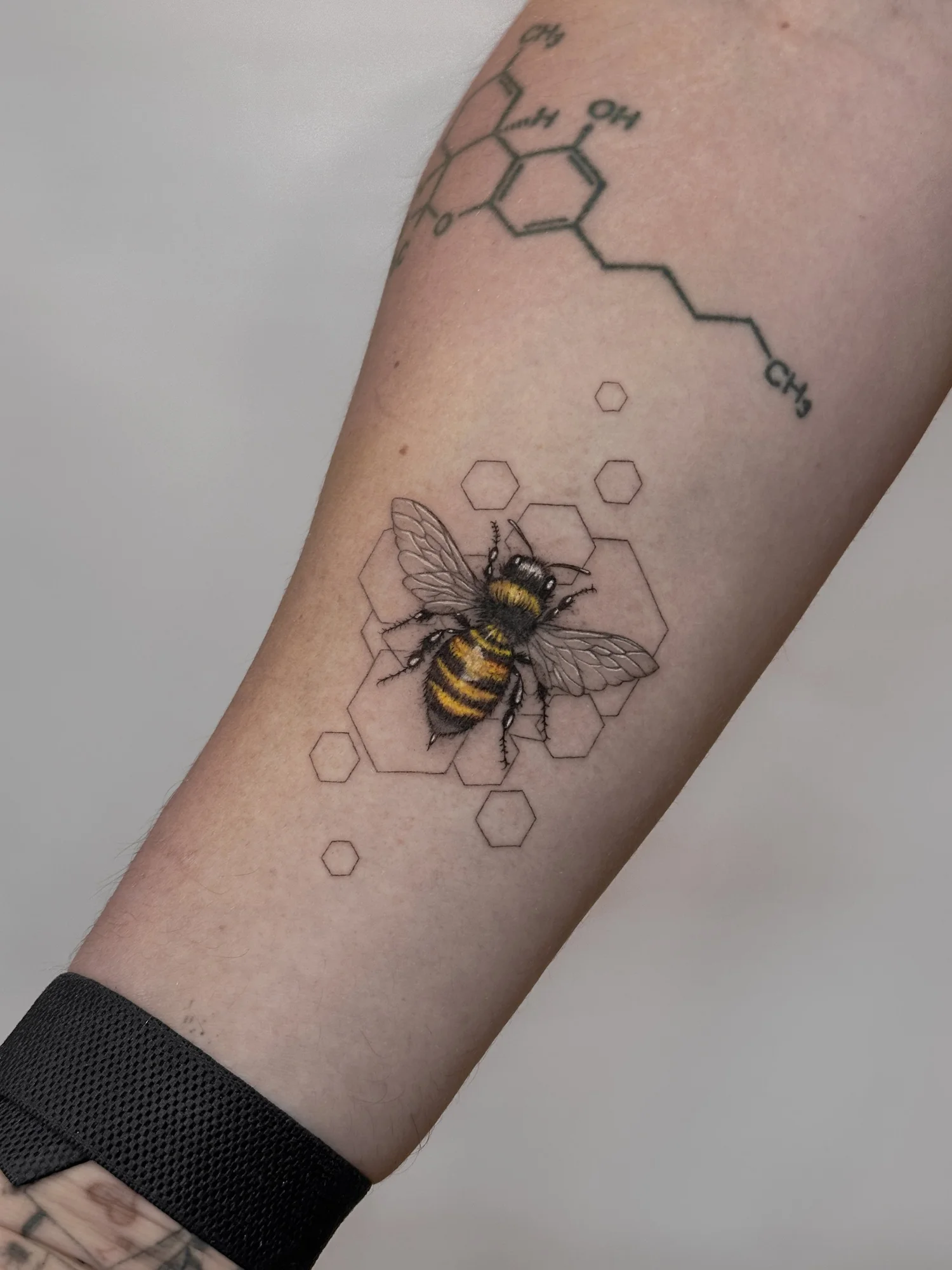
The bee above sits with honeycomb and a molecule diagram on the forearm, which shows how a small insect can anchor a bigger idea.
For longevity, forearms, upper arms and ribs hold fine detail well. Hands and fingers soften fastest because of friction and washing, so a micro spider on a finger will need more care and touch-ups than one on the arm. The Kastana guide to the best placement for a fine line tattoo covers the full picture.
How do you care for a small insect tattoo while it heals?
A small insect tattoo heals like any fine line tattoo. The full routine is in the Kastana aftercare guide.
Once healed, keep those tiny legs and antennae out of strong sun when you can. Living in Los Angeles, that habit does more for a small tattoo than almost anything else.
FAQ
Do small insect tattoos fade?
Every tattoo softens, and the thinnest lines soften first. Enough size, clear spacing between legs and wings, a stable placement and sun protection after healing keep a small insect readable.
Can you add a small insect to an existing tattoo?
Often, yes. A bee near a flower or a dragonfly near a branch can join a piece you already have. Send me a clear photo of the existing tattoo along with your idea.
How long does a small insect tattoo take?
It depends on size and detail. A simple silhouette is quick. A micro realism insect with shading takes longer, because tone is built gradually with a single needle.
Are touch-ups included?
I include one free touch-up within six months. Hand and finger touch-ups are $50 within one month.
How much does a small insect tattoo cost?
My minimum is $300. More detailed pieces are quoted once I see your idea and references.
If you want a tiny insect drawn just for you, book with me at Kastana.